Let's Calc

Absurd questions, taken seriously.

How much energy does the rush-hour subway squeeze out of your ribcage? If a paycheck literally fell from the sky, how would the IRS classify it? Let's Calc runs everyday absurd questions through math, physics, economics, law, and statistics — and shows the working.

Explore by Category

Latest Calculations

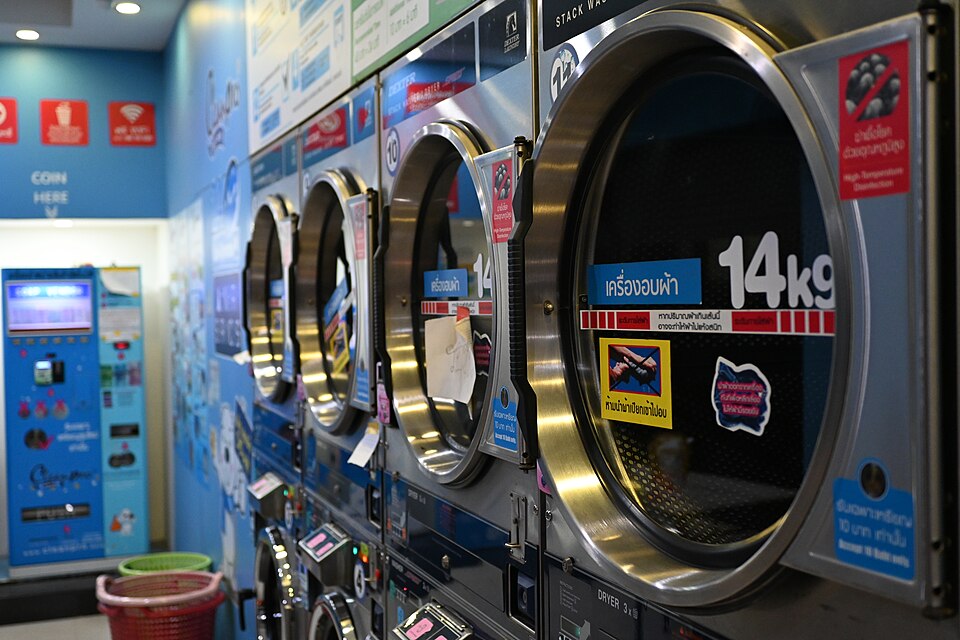
Washing Machine vs. Hand-Washing vs. Laundromat: Who Really Wins on Water, Energy, Carbon and Cost?

Washing Machine vs. Hand-Washing vs. Laundromat: Who Really Wins on Water, Energy, Carbon and Cost?

A washing machine does save water, but the dryer may decide the real contest. We compare drum and top-loading machines, hand-washing and self-service laundromats per kilogram of laundry for water, energy, carbon and cost, and test how drying method and the trip to the laundromat reorder the results.

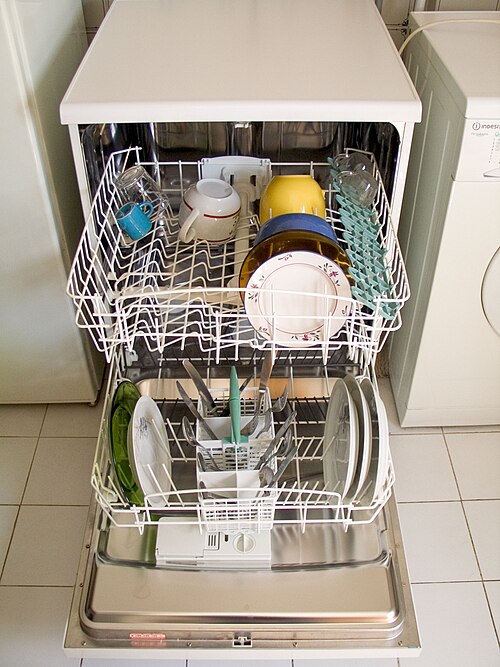
Dishwasher vs. Hand-Washing: Who Really Wins on Water, Energy, Carbon and Cost?

Dishwasher vs. Hand-Washing: Who Really Wins on Water, Energy, Carbon and Cost?

A dishwasher uses less water, but who wins on cost and carbon? We compare it with frugal hand-washers (UK measurement) and average ones (German experiment), with gas or electric hot water and different loads, and work out how many days a single person should wait before running a load.

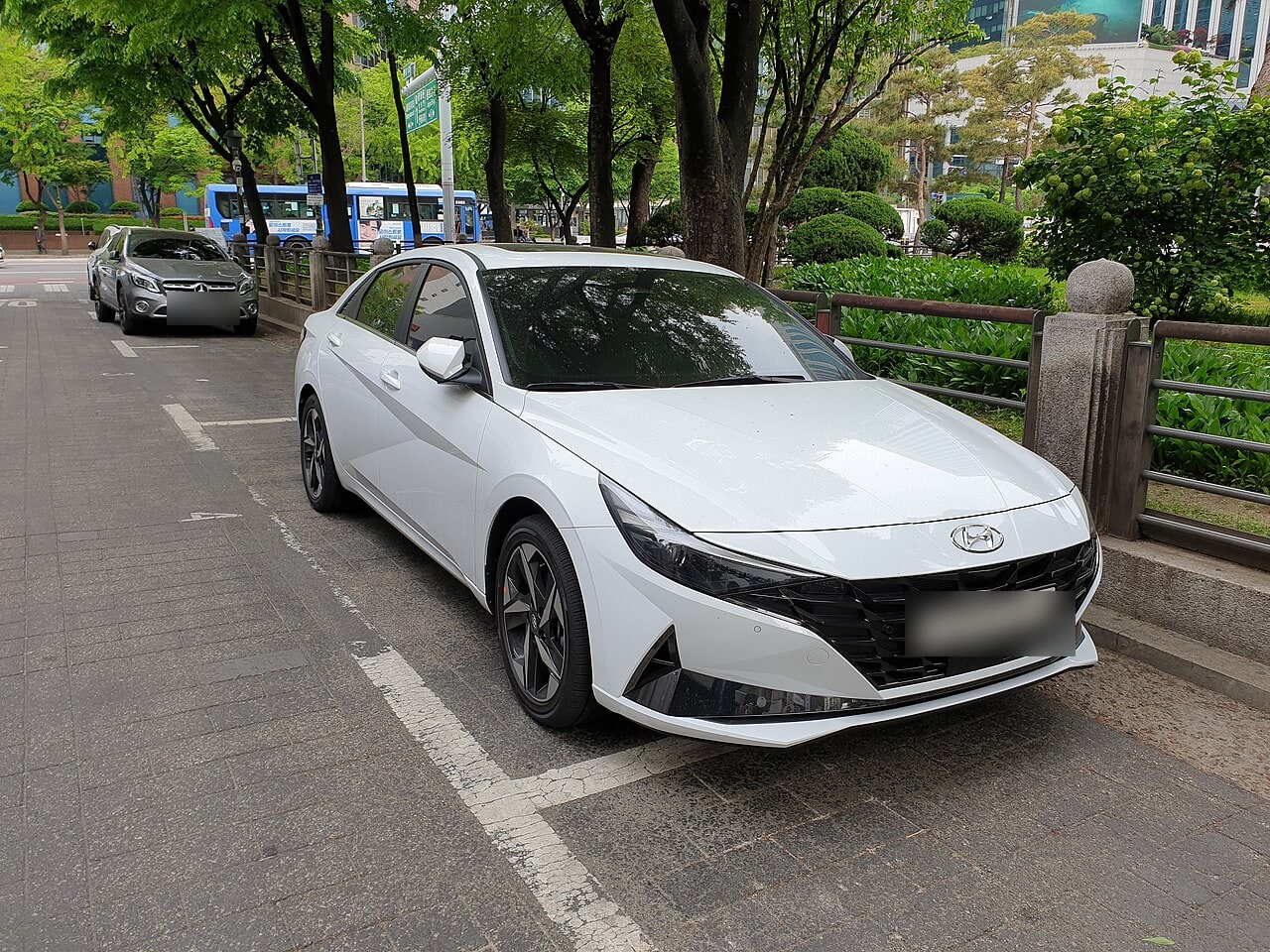
Buy New, Buy Used, or Lease an Elantra for 5 Years? — What the Lease's $2,000 Premium Actually Buys

Buy New, Buy Used, or Lease an Elantra for 5 Years? — What the Lease's $2,000 Premium Actually Buys

How much does the same Hyundai Elantra (the Avante in Korea) really cost over five years — bought new, bought as a 3-year-old used car, or on a 60-month long-term rental? This piece breaks down exactly what the lease's ₩49,021 (≈$34) monthly premium over buying new actually buys — depreciation uncertainty, breakdown risk, upfront capital — and finds the new-vs-used race, a ₩1.27M gap in cash terms, closes to a mere ₩9,193 once real financing rates enter the picture.

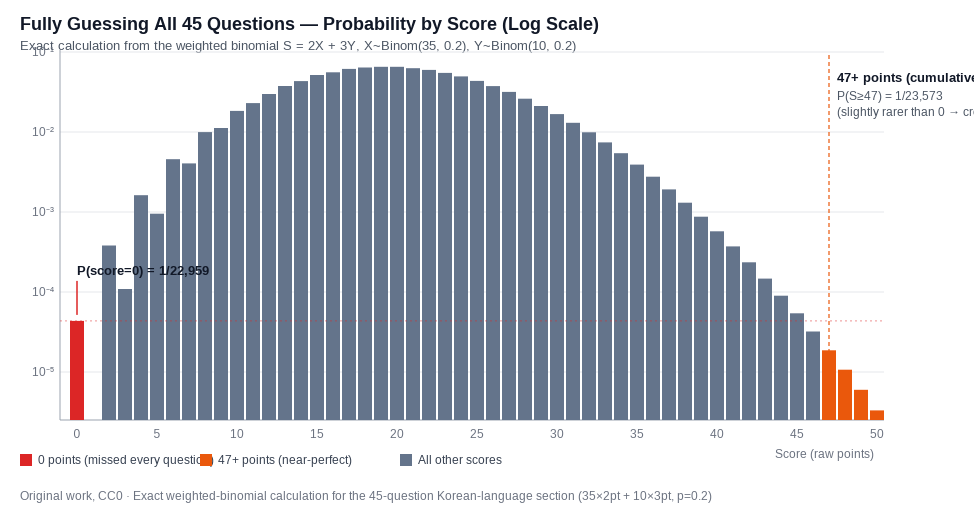
If You Guessed Every Answer on Korea's CSAT, What Score Would You Get?

If You Guessed Every Answer on Korea's CSAT, What Score Would You Get?

Guess your way through all 45 questions on the Korean-language section of Korea's CSAT and the math says you'll land near 20 points, with a standard deviation of 6.07. But the odds of a flat zero sit in the exact same statistical neighborhood as the odds of scoring 47 or higher. The probability of a perfect 100 is 3.52×10⁻³² — 8,158 times the age of the universe, even with 8 billion people guessing once a second. The twist: that terrible probability comes from question count, not difficulty, until real perfect-scorer data reveals the actual culprit is a handful of killer questions. Run the same math on the redesigned ACT and the odds get even more absurd.

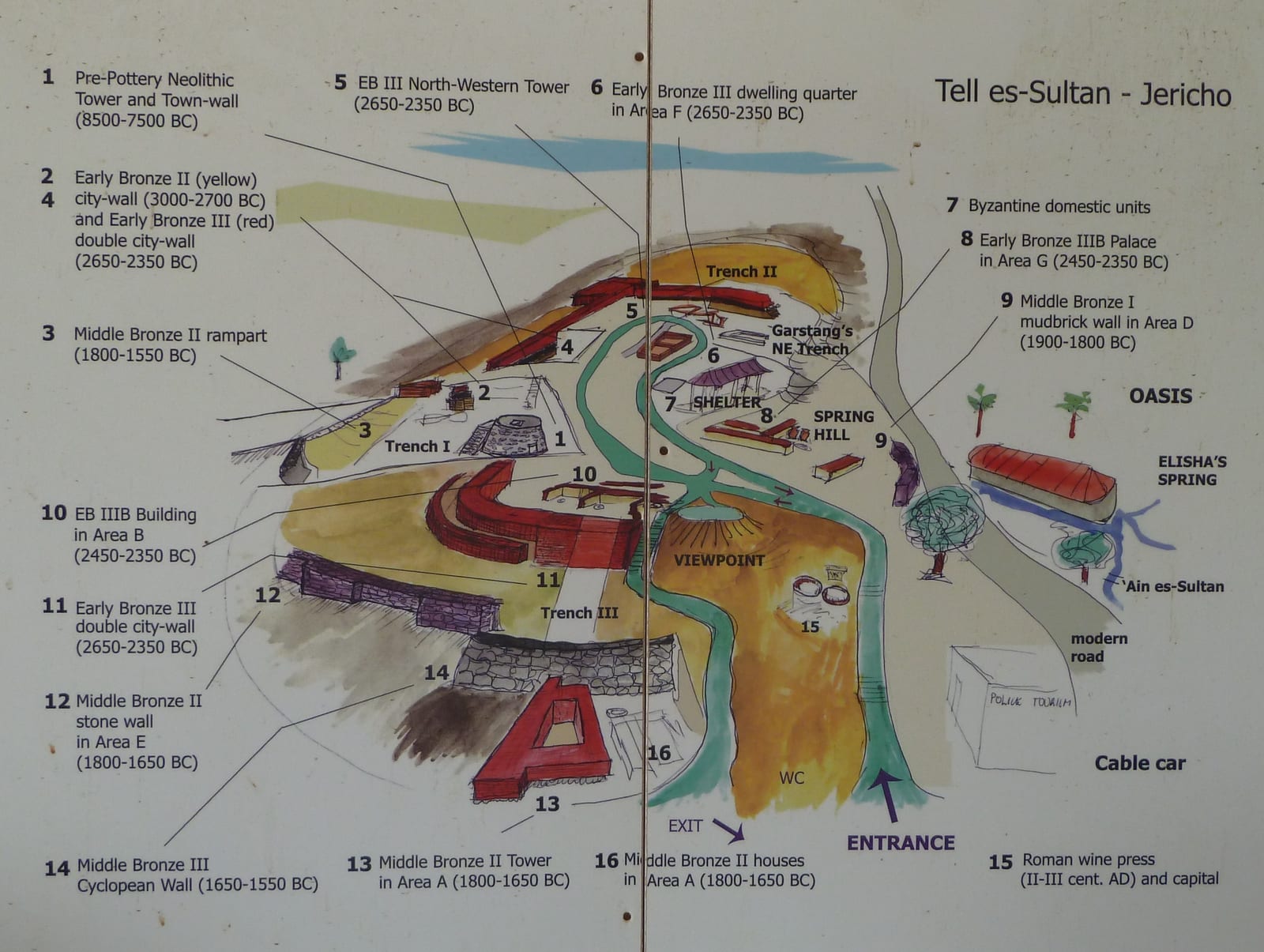
Can You Measure Faith in Joules? Marching Around Jericho 13 Times

Can You Measure Faith in Joules? Marching Around Jericho 13 Times

The Book of Joshua describes six days of marching once around Jericho's walls, then seven laps on the seventh — 13 laps in all. How far did that add up to for one person, how long did it take, and how much metabolic energy did 40,000 marchers burn doing it? We reverse-engineer the city's size from archaeology, weigh three guesses at how far back from the wall they actually walked, and convert the total into joules — and, just for scale, into tons of TNT.

About Let's Calc

Let's Calc takes everyday absurd questions and oddball hypotheticals seriously. Each post draws on math, physics, economics, law, or statistics, and follows the signature [INPUT] / [FORMULA] / [OUTPUT] format — assumptions stated, working shown, punchline at the end.

Read more about us →